
+ 3 What in all holy hell is a half-life exactly?
So I recently was asked to explain half-lives since most members seem to have a misconceived view of what they are exactly. Now I'm going to be laying down some fairly advanced math here so if you don’t understand I’m sorry, but I really tried to make it as basic as I possibly could.
So to start with half-lives do not mean that there is a linear decay. However the RATE at which steroids decay is linear. What do I mean by this? Take a look at this graph.
http://www.mathexpression.com/images/graph-of-y-neg-x-4.png
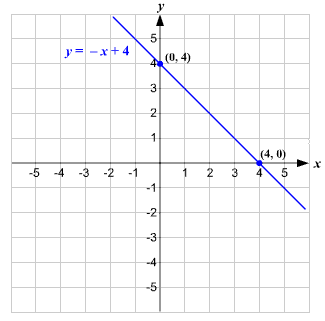
This is a linear graph. This is what you guys are trying to interpret steroid half-life to be like in terms of how much testosterone you have in your body as a function of time. This is not the case. What a half-life saying is the rate of change of testosterone per half-life time is linear or decays at a standard non-exponential rate.
In mathematical differential equation terms this can be represented as dY/dT=-kY (where Y is the amount of testosterone in your body and T is time. k is our decay constant. This basically factors in how fast the material decays. Smaller half-life would have a larger decay constant.
Those d’s stand for differentials. This is basically saying an infinitesimally small slice of something. dT would represent an extremely small amount of time passing. Like .00000000000000001 half-life times. This allows us to take measurements of things that don’t have linear changes.
Anyway with our expression which we just derived (dY/dT=-kY) we can separate our variables and integrate. This is basically what a differential equation is (although this is extremely basic and the easiest form of differential equations).
Separating our variables we get
Dy/Y= (-k)dT
Now that our variables are separated we can integrate to find the amount of testosterone per unit half life. If you don’t know how to integrate from calculus I can’t really help you. It would take too long to explain. You’ll just have to trust me that I am integrating properly.
Ln(Y)=-kT+C
C is our constant of integration. It allows us to plug in different conditions without having to completely change our equation. It just represents a number that we can calculate. In this equation C will turn out to be the initial amount of testosterone injected (although this will only solve for the half life decay of a single injection, trying to explain a system of differential equations would be complex so after I finish showing half life of a single injection I’ll move onto excel and you’ll just have to trust my numbers)
Now to solve for Y (amount of testosterone in your body at any time T). To get rid of a natural log you must e both sides. e is Euler’s number (pronounced oiler) and is roughly 2.71828.
After we e both sides we get
Y=e^(-kT)+e^C
We can simplify this to
Y=C’e^(-kt)
Now we can solve for C using the initial values we were given. Say we injected ourselves with 500mg of testosterone enanthate, that would mean at time t=0 the amount of testosterone enanthate in our system would be 500mg. So
500=C’e^(-k(0))
-k times zero is zero and any exponent to the 0 power is equal to 1 so this simplifies to
500=C’
Which makes our function
Y=500e^(-kT)
With this we can solve for the amount of testosterone we have in our system as long as we have our k (which is our rate of decay constant which would vary depending on the half-life).
Knowing the half-lives we can even solve for our decay constants. If we know that test E has a half life of 10.5 days we can solve for our k by
250=500e^(-k(10.5))
Solving for k we get .066014 which makes our equation
Y=500e^(-.066014*T)
With this we can plug in any amount of time and know how much test E there is in our body after injecting 500mg of testosterone enanthate into our bodies.
So say I wanted to know how much test E was in my body after 5.25 days. That’s half the half life. So I should have ¾ of the test E still in my body right? Wrong. This is exponential decay. The greater the amount of testosterone the faster it leaves your body. Meaning the rate at which testosterone is leaving your body is constantly changing. We can find out exactly how much testosterone is in our body with our derived expression though.
Y=500e^(-.066014*5.25)
Y=353.553mg of test E which is not ¾ of 500 (which would be 375)
Anyway I don’t know if any of you will be able to understand what I just did but hopefully you can follow it enough to understand that first of all testosterone esters are constantly decaying in your body and also that it does not decay linearly over time.
- Bookmark
- 4
- 1
Buildbigger86i Agree, This what a good idea to post but it is very complex. I like the reading though. But i posted below AAS'S half life's @ x amount of mg's per week.
Cheers bro
Roidcalc.com this site does what your asking
Never seen that one before cheers bro
Buildbigger86Havoc, Very cool. I love the calculator. It's things much easier.
thank you
Terephthalic Pt...That actually wouldn't be that hard to do. I couldn't do it personally because unfortunately I know absolutely nothing about programing, but if I could work with someone who knows how to program I could easily determine all the k values for the esters and we could work together on writing something that would just multiply out the number for you.
Variations would be the hardest part. Changes in dosage protocol and such.
Doubtful it would happen though.
You never no bro bfg has shit on lockdown with eroids trinkets he mite just add this on his next update.
Buildbigger86READ THIS POST:
Half life's of gear.
http://www.british-bodybuilding.co.uk/Half-Life.shtml
my head hurts
"So to start with half-lives do not mean that there is a linear decay. However the RATE at which steroids decay is linear. What do I mean by this? Take a look at this graph.
http://www.mathexpression.com/images/graph-of-y-neg-x-4.png"
I don't understand the point of this graph in this postin. Decay is not linear and the half life math is based on the amount that is in the system at any given time not the original injection. So why I agree that 5 days after a 500 mg injection would be approximately 353 the graph from 500 to 353 would not be linear. It would be logarithmic.
Terephthalic Pt...The rate is linear. The slope of the function is linear. And it's exponential not logarithmic.
So would this linear function graph be the same in appearance as every other drug profile out there?
The graph and the function is exponential. You are correct it is not log function. However, it is not linear either.
Terephthalic Pt...Well the graph is exponential. The rate of change is linear.
And yes. If you had the half life you could use this formula to solve for any first order half life drug. However there are some drugs I believe that don't have first order half-lives. In which case the rate of change would not be linear.
To do this you'd have to do a second order differential equation which is much much much more complicated and would require higher level mathematics. Not to mention you'd need to know the rate at which the rate of change was changing.
These equations follow y''+y'p(x)+y*q(x)=r(x) where p, q, and r are functions of time.
It becomes much more complicated. Although I'm not positive that drugs have second order half lives. I know it occurs with reactions and decay of materials, but I don't know for certain if drugs do this.
I'd have to see your graphs of a cycle. Something doesn't seen right in your math.
Terephthalic Pt...http://i1346.photobucket.com/albums/p690/TerephthalicPterodactyl/TestEha...
There you go. Pretty sure I did the math right, but if you find something let me know.
Also did this one for a front load cycle, but I didn't use a differential equation to solve it. I was lazy and just plugged in numbers while subtracting rate of change. My differential was also half a day which would skew my numbers a lot more than the graph up top where my differential was .05 days.
http://i1346.photobucket.com/albums/p690/TerephthalicPterodactyl/Halflif...
Yes I agree with the graph. But it is not linear. However if you were to plot a trend line that function would be linear. I use a derived function to calculate my levels. My graphs look like this
http://www.eroids.com/forum/general/general-talk/maximizing-cycles
This is from a write up I did a while ago and I use graphs to illustrate my point. The dosage amount is a log function the half life decay is an exponential function and the elimination rate (k) is constant like the calculus bases function you derived above.
Terephthalic Pt...I'm not saying the graph is linear. I know the graph is exponential. However the rate at which the testosterone is changing is linear.
Have you ever done a derivative? What you're doing is solving for the slope of the graph. Slope is rate of change.
I'm saying that Y' or the derivitive of Y which is that graph is linear.
For example the graph Y=X^2 is not linear. However it's derivative Y' is equal to 2x. This graph is linear.
The rate at which testosterone is changing over time is linear. The amount of testosterone as a function of time is exponential.
And yeah your stuff looks pretty good. However your graph is restricted to you doing individual assessments of testosterone over your differentials. Those graphs probably took you quite a long time to make. Whereas with a function I can just click and drag in excel and have it accurate up to any small length of time I choose.
Yes I know how to do derivatives and integrations and a whole host of other calculus functions. I am an engineer so this stuff is pretty standard. You are being presumptuous as to my math skills, excel abilities and my graphing capabilities. I too know how to put a function in excel and drag the cell down to the desired day using any dosing interval I choose. Once you know the math it takes 20 seconds to input a function and another 15 to graph it. Also there is no way you are dropping from 600 down to 557 in 12 hours. It is 560 exactly one day later. I see that you found K correctly using Ln(2)/10.5. This gives you the 0.066014017 number you used up above but from there our calculations differ drastically. I see what you did but you didn't verify your math. If you did, then on day 10.5 on the left column you would have exactly 300 mg not 126. You hit the 307 mark at 4.5 days. Does that sound right?
On another note. Your cycle and graph don't seem to add up. I am assuming the first graph in red is a single 600 mg dose of test e and the amount of days it takes to drop to 0 is around 55 this is about right but I am not following your second graph so well. You start out with a 600 shot then three days later another 600 followed by another 632 four days after that followed by 705 three days later and then it drops off the pic. So I am assuming you are front loading for about two weeks and then maybe doing a 300 twice a week roughly but your dosing schedule does not make any sense. Your steady state median level isn't going to be very stable that way in my opinion. Your peaks jump from 800 down to the high 7's back up to 800 every other interval. You can avoid this by keeping the same shot intervals every time. I know the old consensus is to shoot Monday and Thursday but that doesn't make any sense when you graph it the way you did or in any graph for that matter. You need to know what the median state is and you can find that using the Median Function in excel. You should remember that from statistics. You want your peaks and troughs to be as close together as possible and as equal as possible throughout the shot schedule. So it makes more sense to have an interval of every three days or even four days but the exact same each shot. Not three days one shot then four days the other.
Terephthalic Pt...I'm only being presumptuous about your math skills because you didn't seem to be able to grasp the simple concept of rate of change being linear. I too am an engineer and something like that is second nature to me.
As for the graph I already told you that I was lazy and just input data values and did linear interpolation with a half day differential to show this guy why front loading was a bad idea. It took me like a minute and it was just to show this guy the harsh spikes of front loading. I didn't derive a decay function or anything.
It was also done using a half life of 7 days. This was done because that was the numbers given in the thread.
I did twice a week injections because that's what he originally said to do in the cycle. This is not my cycle. This is an example of a bad cycle.
http://www.eroids.com/forum/steroids-qa/steroid-cycles/front-loading-vs....
That's the topic I made this excel graph for. You'll notice he emphasizes one shot per week. This was changed after I submitted my graph.
Trust me I did EOD injections of Test E for my cycle. I know that you want to keep levels as stable as possible.
waltryou lost me right here,
"Knowing the half-lives we can even solve for our decay constants. If we know that test E has a half life of 10.5 days we can solve for our k by
250=500e^(-k(10.5))
Solving for k we get .066014 which makes our equation
Y=500e^(-.066014*T)"
can you explain it more for someone not quite so mathematically gifted?
how did -k turn into .066014?
y = a(1 - r)^t
is the formula for exponential decay.
250=500e^(-k(10.5))
t is the time and he put 10.5 which is the half life, the 500 is the initial dose and 250 as the half dose.
a is the initial amount 500mg
so the second equation is the 500mg dose and the rate of decay (-0.066014t)
I'm not 100% but I think I'm on the right track lol
waltrnoooow i get it...
e is eulers number, that's the part i skipped over
edit
still don't understand how you solve the equation, which is what my next question is =/
Use this formula
Ct = C0e ^(-kt)
Ct is the concentration at half life, C0 is the initial concentration, k is the elimination rate constant
so Ct = 1/2 of 500. 500 is the initial concentration. e^-kt is the order of elimination t is half life of enanthate 10.5 days
250 = 500e^(-k10.5)
solve for k then plug K into this equation: (k = -0.066014)
Y=500e^(-.066014*T)
you can plug any number in for T with the above equation and that will tell you the amount of drug active at that day.
waltrer does e just mean exponent? -_- i feel dumb
Terephthalic Pt...No. You had it before. e is Euler's number. It's just 2.71828. (well in the same way that pi is 3.14 e is an irrational number as well)
So e^3= 2.71828^3
It's just that e is used to cancel out natural logs.
waltrthis math is beyond me, and i'm choosing to accept that and simply take your word for it.
Terephthalic Pt...Oh don't do that. If you can figure out how to use this formula you can calculate how much testosterone ester is in your body at any given moment. This would be incredibly useful.
In fact if we get enough smart people to make cycles we could even revolutionize preset cycles to make it so you could have the most stable levels all throughout your cycle.
This would maximize gains while minimizing side effects.
waltrhere is where i'm stuck.
250=500((2.17828^(-k10.5))
so i solve 2.17828^-10.5k (same thing anyway right?)
i can't get a calculator to let me enter that (using some online calculator found by searching google for online calculator scientific)
waltrwait tried a different calculator, now i have:
250=500(0.00028171249373k)
which is 250=0.14085624686k
then i divide both sides by 0.14085624686 right?
but that leaves 1682.79379278=k
=(
Terephthalic Pt...I have no idea how you got from e^(-k*10.5) to (0.00028171249373k), but whatever you did you can't do that.
If you wanted to solve you'd have to divide 500 over then natural log both sides. You'd then have to divide by 10.5, but there are some log rules you have to be careful about.
Terephthalic Pt...Do you have excel? You can use excel's solver for it.
waltrmy expertise with excel leads more towards making nice neat rows of data that i don't have to use functions in.
meaning i have no freaking clue how to plug a calculus equation into excel
Terephthalic Pt...There's a solver you can add on which solves equations for you. And once you get to integrate you're done with all the calculus you need.
250=500e^(-k*10.5) is purely algebraic.
waltrwhere do i find said solver in excel
Terephthalic Pt...Blam you have solver which can be accessed through the data tab.
waltrit says set target cell content must be a formula
i put 250 = 500e^(-k10.5) in the cell, what should i be putting in the cell
Terephthalic Pt...You have to make a formula.
So it would be =500(star)exp(-B2(star)10.5)-250 (use a * instead of star. This forum just uses that for syntax so I can't use it to represent multiplication)
B2 is just an example cell. You could make it whatever you wanted. set your objective to the equation cell and then your changing variable cell to where ever you want your value to come up. Click solve and it should give you the answer in your set cell.
waltrit gave me 250 as the answer when i put that in
Terephthalic Pt...It shouldn't have.
I'll walk you through it step by step.
=500(star)EXP(-B2(star)10.5)-250 copy and paste this formula into B1 be sure to replace star with *
Hit the solver button
For set objective click the button and then click on B1 the objective set should be $B$1
Set the To thingy to value of and make it 0
For the by changing variable cell click the button and then click B2 the changing variable cell should be set to $B$2
Click solve. It should give you your value in cell B2 for k
waltrworked that time.
thanks for the step by step, guess it kinda clogged up the post but now i can input the information at least
.
e is not an algebraic number (kind of like how pie is a weird squiggly shape but it means 3.14).
e is the base of natural log and as Terephthalic Pterodactyl said: it is eulers number 2.178...
I'm still taking calculus bro. I have no degree or anything (yet) haha
waltrmy question is how do you solve for k, calculus was some years back and i only vaguely remember being there when i wasn't smoking weed =/
once you plug everything in k is the only constant
250 = 500e^(-k10.5)
Terephthalic Pt...This^^^
If you wanted to know your new amount after an injection you would just add the value of the testosterone in your body at the time of the injection plus the injection amount and that would equal your new initial concentration. Continually do this over time and you can always know how much testosterone ester is in your body.
Granted you need to actually know the half-life. I'm not positive all the half-lives in the sticky are correct.
Terephthalic Pt...I plan on doing a bunch of excel charts to show rate of decay for the different esters of testosterone and a few basic cycles.
I might even optimize a nice kicker cycle so that you can maintain extremely stable testosterone levels.
Might be nice for newbies to have.
VERY well written and i followed it from start to finish! +3
Why do you think calculating half lives are misconceived by so many?
Terephthalic Pt...Experience looking at threads. I'm sure there are plenty of people who understand it. It's just the ones that don't stand out to me.
The whole you only see the bad because you only pay attention to the bad whereas you overlook the good.